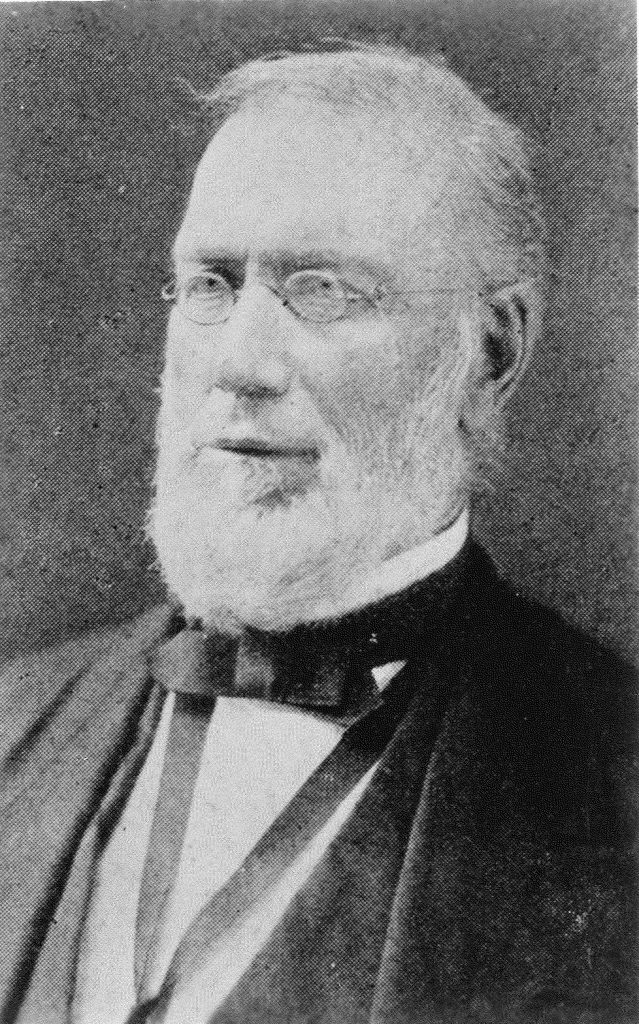
Read Hall, designed in 1901 by the St. Louis architectural firm Cope and Stewardson and completed in 1903, was a white limestone building originally known as the Women’s Dormitory. It was among the first Collegiate Gothic buildings on the University of Missouri campus and helped establish the architectural style for the limestone campus. The building was later named for Daniel Read, who served as university president from 1863 to 1876. During his presidency, Read championed educational opportunities for women, advocated for the establishment of professional schools and helped guide the university’s transition to a land-grant institution in 1870. His leadership helped shape Mizzou’s educational mission and expand access to higher education across the state.
- Missouri became a land-grant institution in 1870, expanding educational opportunities in agriculture and mechanical arts. This mission remains a fundamental part of the university’s work today.
- Read believed universities should foster intellectual curiosity, investigation and open-mindedness while resisting sectarianism, partisanship and sectional divisions.
- During the 1918 influenza pandemic, Read Hall was repurposed as a ward to care for sick women.
- In 1939, the building was updated, enhancing its role as a gathering space, with a soda fountain and booths, where students could socialize or study. The building served as the student union until 1963 when Memorial Union’s north wing opened.
- A remodel in 1964 modernized the first through third floors, following updated architectural plans and extending the building’s functionality for student use.
- In the 1970s and 1980s, it served as the headquarters for the student newspaper, the Maneater, becoming known for its third-floor offices, where layers of graffiti covered the walls and ceilings. It was filled with jokes, commentary and late-night reflection from generations of student journalists. The Maneater relocated to Brady Commons in 1985.
- The history department moved into Read Hall in 1988 and used it primarily for faculty, graduate student and staff offices until its demolition in 2022.